About GDDN
A network for the people who build public services on Drupal.
Developers, designers and product people across government, sharing what works so nobody builds the same thing twice.
.jpg)
Better public services, built together.
Hundreds of public sector organisations run their websites and services on Drupal. Most of them face the same problems: accessible forms, content migrations, security patches, search that works, and never quite enough people.
GDDN exists so those teams can solve each problem once, together. We connect the people doing the work, give them a safe place to ask questions, and help good ideas grow into shared products that any organisation can pick up.
“To connect, support and empower Drupal professionals across government and the public sector.”
What we believe.
Build once, reuse everywhere
If one council has solved it, no other council should have to pay to solve it again. We share code, patterns and lessons by default.
Work in the open
We talk in public threads, not private inboxes, so the answer helps everyone who looks for it later.
Users first, then technology
Drupal is how we deliver. What matters is the resident renewing a permit at 11pm on a phone.
Generous and kind
Everyone was new once. We assume good intent, give credit, and make it easy to ask a question you think is basic.
Accessible by default
Public services have to work for everyone, and so does this community. Accessibility is part of how we judge quality.
Vendor neutral
Suppliers are welcome as partners, but GDDN is run by and for public servants. Nobody sells from the stage here.
By members, for members.
GDDN is not a company and doesn't sell anything. It's a network of people who give some of their working time, with their employers' support, because sharing makes all of our jobs easier.

Steering group
Seven members from different organisations and countries set priorities and look after the budget, which is mostly event venues. Anyone can stand at the annual meetup, and the term is two years.
Moderators
Volunteers approve applications, look after discussions and handle reports under the code of conduct. Their names are public, and they don't moderate threads they're part of.
Working groups
Any member can propose a working group. Each one has two leads and works in the open, and it is closed when it has done its job.
Frequently asked questions.
Who can join GDDN?
I work for a supplier. Can I join?
Does it cost anything?
How long does approval take?
Can I share code from GDDN projects in my organisation?
Is GDDN only for the UK?
How do I report a problem or a post?
05 · Code of conduct
How we treat each other.
Everyone who takes part in GDDN, online or at events, agrees to this code. It is based on the Drupal community's Code of Conduct and the Contributor Covenant.
We expect you to
- Be kind and patient, especially with people who are new.
- Respect different experience, roles, organisations and countries.
- Criticise ideas and code, not people.
- Credit other people's work and ideas.
- Keep anything shared with you in confidence private, including security issues.
We don't accept
- Harassment, discrimination or personal attacks of any kind.
- Sales pitches, recruitment spam or unsolicited marketing.
- Sharing personal data, or details of unpatched vulnerabilities, in public threads.
- Posting on behalf of your organisation without permission.
If something goes wrong: use the report option on any post, or email conduct@gddn.gov. Moderators respond within one working day. Depending on what happened they may give a warning, remove content, or suspend the account.
This site is for everyone.
We want as many people as possible to be able to use GDDN. We aim to meet the Web Content Accessibility Guidelines (WCAG) 2.2 at level AA, and we test with keyboards, screen readers (NVDA, VoiceOver and JAWS) and browser zoom up to 400%.
Built-in accessibility controls
Every page has an Accessibility button in the strip at the very top. You can use it to:
- make text larger without breaking the layout
- switch to a high contrast colour scheme
- use a dyslexia-friendly font (Atkinson Hyperlegible) with wider spacing
- turn off animation (we also follow your device's reduced motion setting)
Your choices are saved in your browser and apply as soon as a page loads.
What we know isn't perfect yet
- Some older content written by members may have images without alternative text.
- Code samples in discussions are not always announced clearly by every screen reader.
Tell us about a problem
If you find something hard to use, email accessibility@gddn.gov or post in the Accessibility category. We reply within 5 working days. We last reviewed this statement in October 2026.
Your data, plainly explained.
What we collect
Your name, work email, organisation, role and the reason you gave for joining. We also store anything you choose to post or add to your profile, and when you were last active.
Why we collect it
To check you're eligible, to run the community, and to show other members who they're talking to. If you sign up for the digest, we use your email to send it, and nothing else.
What we never do
Sell or share your data, use advertising trackers, or show your email address to other members. We only use cookies to keep you signed in and to remember your display settings.
You can ask for a copy of your data, correct it, or delete your account at any time by emailing privacy@gddn.gov. We delete accounts that have been inactive for three years, after warning you first.
The photographs on this site
All are real photographs from Drupal community events, shared under open licences on Wikimedia Commons. None are AI-generated.
- A session on components at DrupalCon Prague 2022Illek Petr, CC BY-SA 2.0, source
- Attendees listening to a talk at DrupalCamp Donetsk 2014dasjo, CC BY 2.0, source
- A sticker-covered laptop at the DrupalCon Prague 2022 receptionBram Driesen, CC BY-SA 2.0, source
- Two developers working side by side at DrupalCamp MexicoKoffermejia, CC BY-SA 4.0, source
- A developer coding during a workshop at DrupalCamp Puebla 2013Koffermejia, CC BY-SA 4.0, source
- The birds-of-a-feather session board at a DrupalConKoffermejia, CC BY-SA 4.0, source
- Attendees at DrupalCamp Centroamérica 2012Ayaita, CC BY-SA 3.0, source
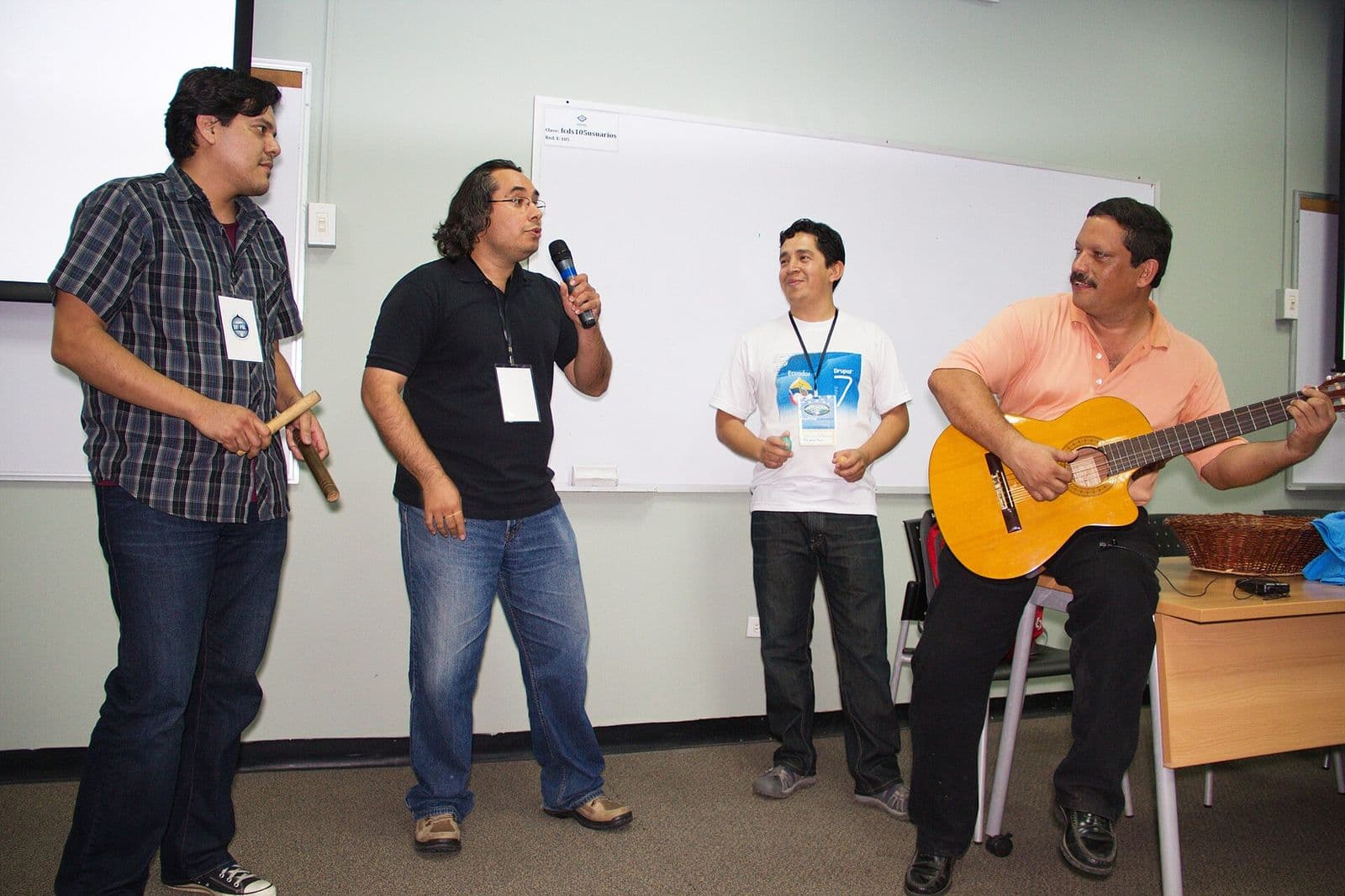
- The closing session of DrupalCamp 2012, with a guitarAyaita, CC BY-SA 3.0, source
- The stage at DrupalCon Prague 2022, with the Drupal dropIllek Petr, CC BY-SA 2.0, source
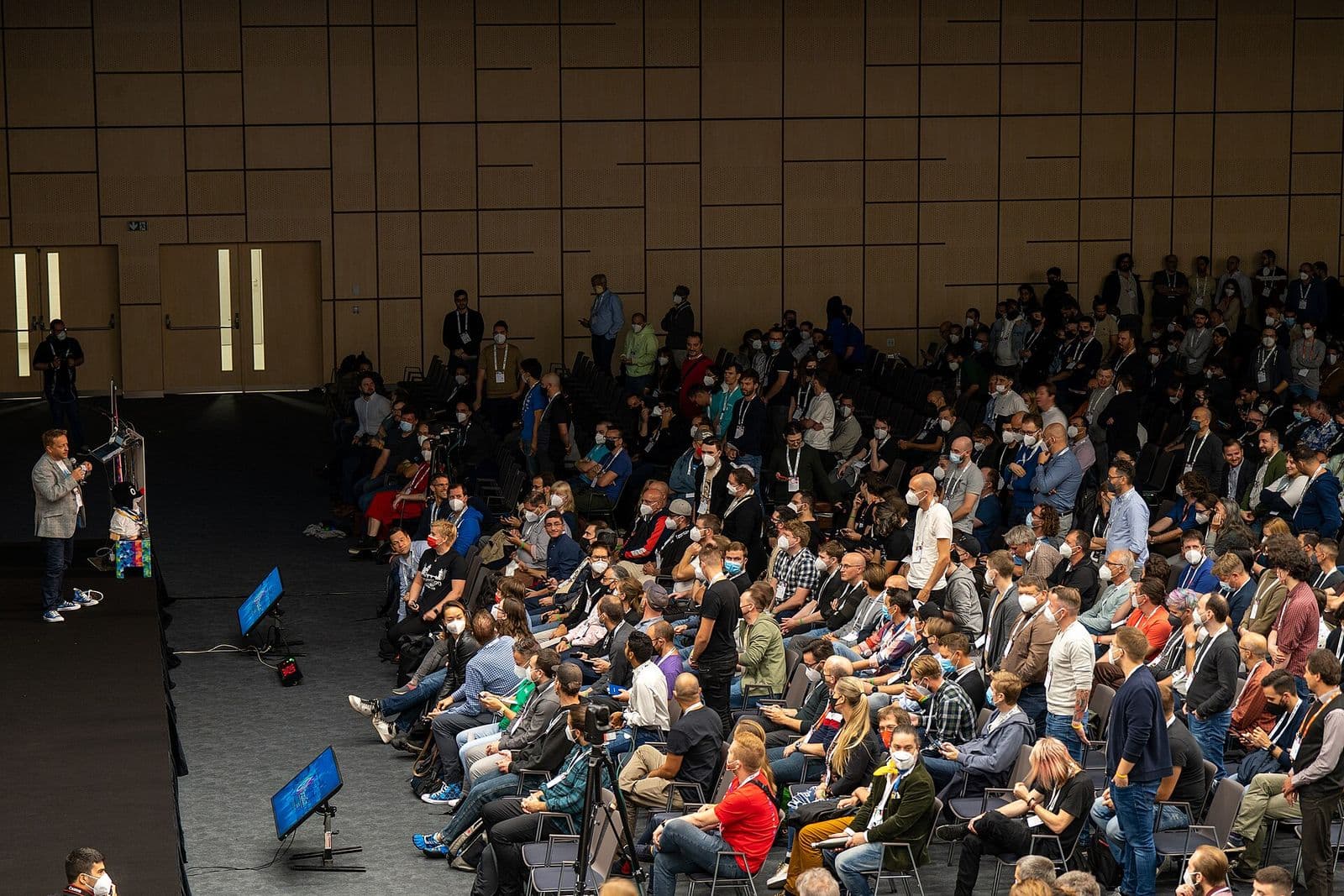
- The keynote audience at DrupalCon Prague 2022Bram Driesen, CC BY-SA 2.0, source
- People talking over lunch at DrupalCamp MexicoKoffermejia, CC BY-SA 4.0, source
.jpg)
.jpg)
.jpg)


.jpg)
